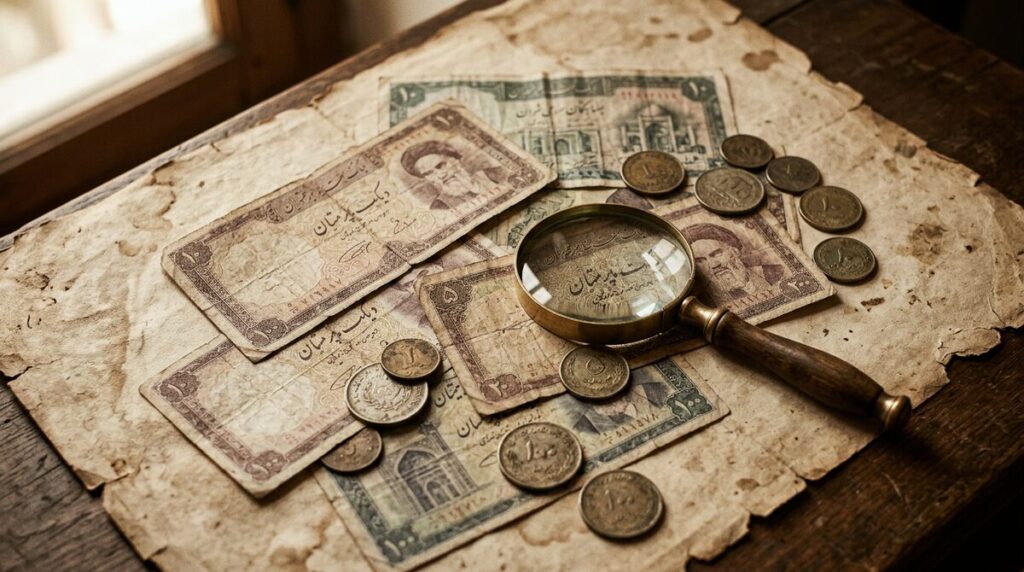
Few currencies have lost value as dramatically as the Iranian rial. In 1979, one US dollar bought about 70 rials. By late October 2026, the same dollar cost more than 2.7 million rials on Tehran’s open market.
Key milestones
| Date | Rials per US dollar | What happened |
|---|---|---|
| March 1978 | about 71 | Before the revolution |
| 1979 | about 70 | Islamic Revolution; capital flight begins |
| July 1999 | about 9,430 | Two decades of decline |
| 2013 | about 36,000 | After new sanctions |
| April 2018 | up to 60,000 (street) | Government fixes an official rate of 42,000 |
| August 2026 | about 2,020,000 | Rial passes 2 million on the informal market |
| 28 October 2026 | 2,701,500 | Open market rate |
Why the rial kept falling
Capital flight after 1979. Large amounts of money left the country around the revolution, putting early pressure on the currency.
Sanctions. Restrictions on oil exports and banking limit how many dollars reach Iran, so demand for foreign currency outruns supply.
Inflation. Persistently high inflation pushes Iranians to protect savings in dollars, gold and coins, which weakens the rial further.
Multiple exchange rates. Attempts to fix an official rate, such as the 42,000-rial rate announced in April 2018, left a growing gap with the street price. Why Iran has two exchange rates.
What comes next
Iran has passed a law to remove four zeros from the rial, so 10,000 current rials will become one new rial. That changes the numbers on banknotes, not the currency’s value. Read about the redenomination.
Follow the dollar to rial rate today.